
Novi Sad doesn’t hit you immediately. You arrive, walk a few blocks, and it feels… almost too calm. Like you’re missing something at first. No obvious landmarks pulling you in. No dense old city maze. Just space, light, and streets that don’t seem to demand anything from you.
At first, it can even feel like you’re missing something.
Give it a little time. Somewhere between a second coffee you didn’t really plan and the walk toward the river, the structure starts to show. The city isn’t empty — it’s just not loud about what it offers. And once you catch that rhythm, everything begins to connect: the center, the bridge, the fortress, the river.
That’s the key to Novi Sad. It’s not a checklist city. It works as a sequence.
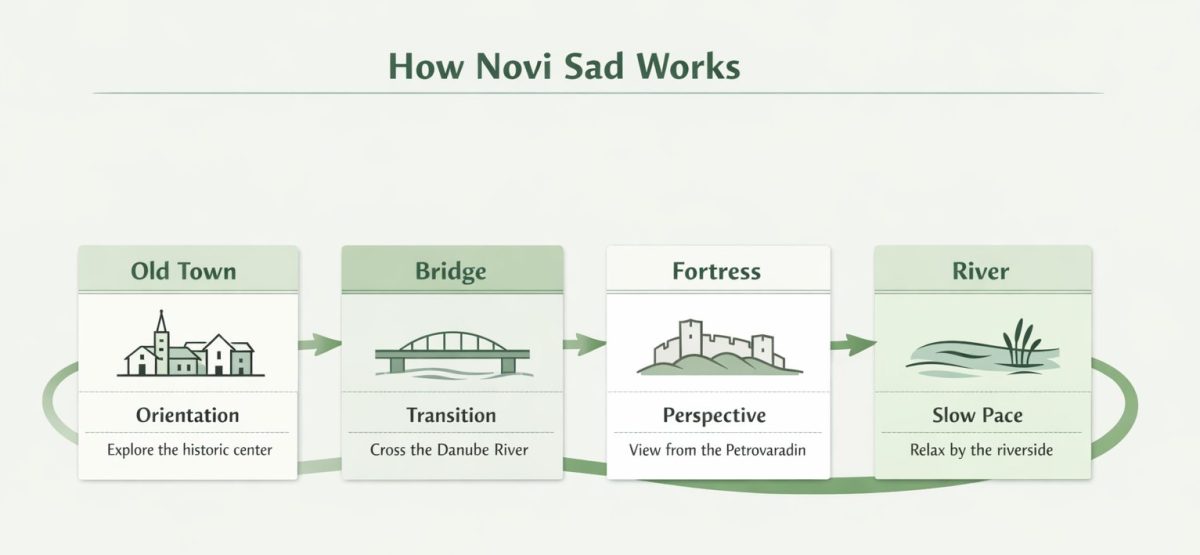
Quick orientationNovi Sad is compact, walkable, and built around a simple flow: Old Town → bridge crossing → Petrovaradin Fortress → Danube riverside. Most first-time visits naturally follow this path, whether planned or not.
Why Novi Sad Feels Different From Other Serbian Cities
If you’ve been to Belgrade, the difference is immediate. Belgrade pushes energy at you. Novi Sad doesn’t. It holds back.
The center is smaller. The architecture feels lighter — more Central European than Balkan-heavy. Streets open instead of tightening. Even when it’s busy, it rarely feels crowded.
And then there’s the river. Not as a backdrop, but as a real part of how the city works. You don’t just “see” the Danube — you end up walking along it, stopping near it, adjusting your pace because of it.
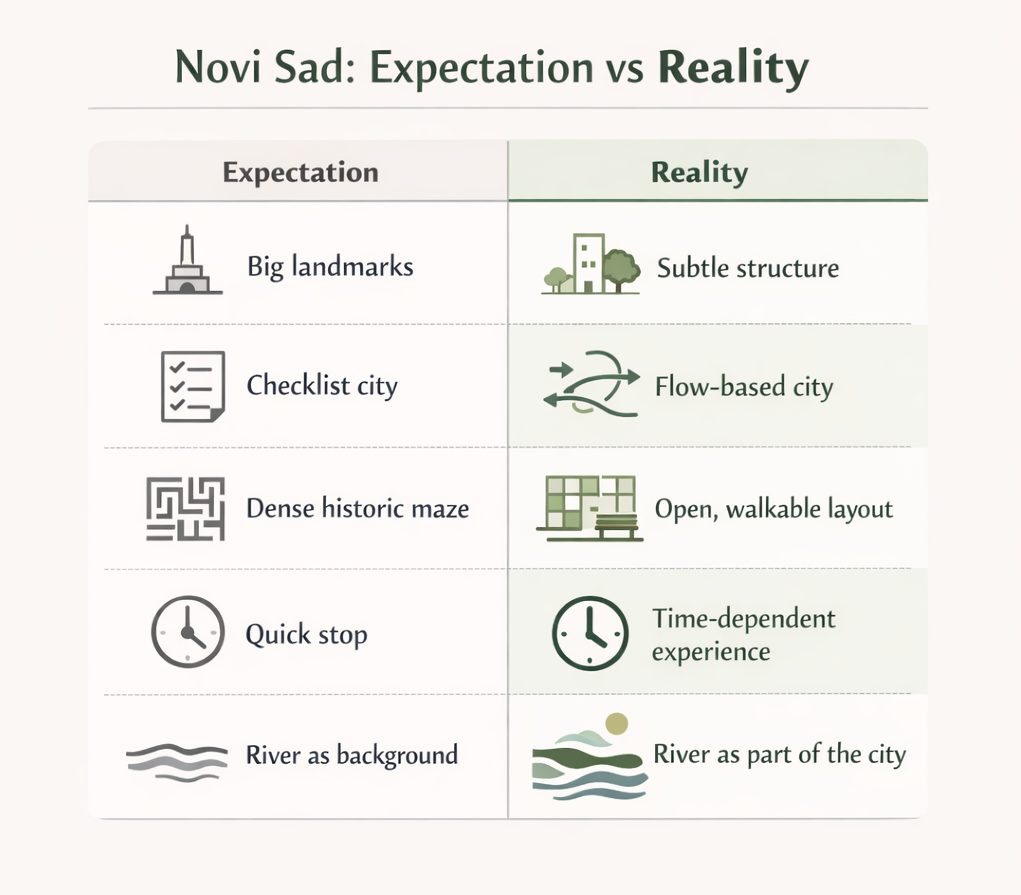
The fortress adds another layer. It’s not just something to visit. It changes your perspective. You cross the bridge, climb slightly, turn around — and suddenly the whole city makes sense.
So instead of asking “what are the top things to do,” a better question here is: how do you move through Novi Sad so it actually feels right?
What to Do in Novi Sad First
The mistake most people make is starting with a list. Trying to tick off places. That works in bigger cities. Here, it just breaks the flow.
Instead, think in movement. Where you begin, how you transition, where you slow down. Novi Sad is simple — but only if you follow its logic.
A simple first-time route
Old Town → bridge crossing → Petrovaradin Fortress → Danube riverside
You don’t really nThe paths stretch out, the city loosens, and suddenly you stop thinking about where you’re going — you just keep walking.eed to think about this route in advance — most people end up following it anyway.
Start in the Old Town
Everything begins in the center. Not because it’s packed with sights, but because it sets the scale of the city.
You walk through Freedom Square, drift into the side streets, and very quickly understand something: this isn’t a place you rush. Distances are short. Transitions are smooth. You don’t need a strict plan here.
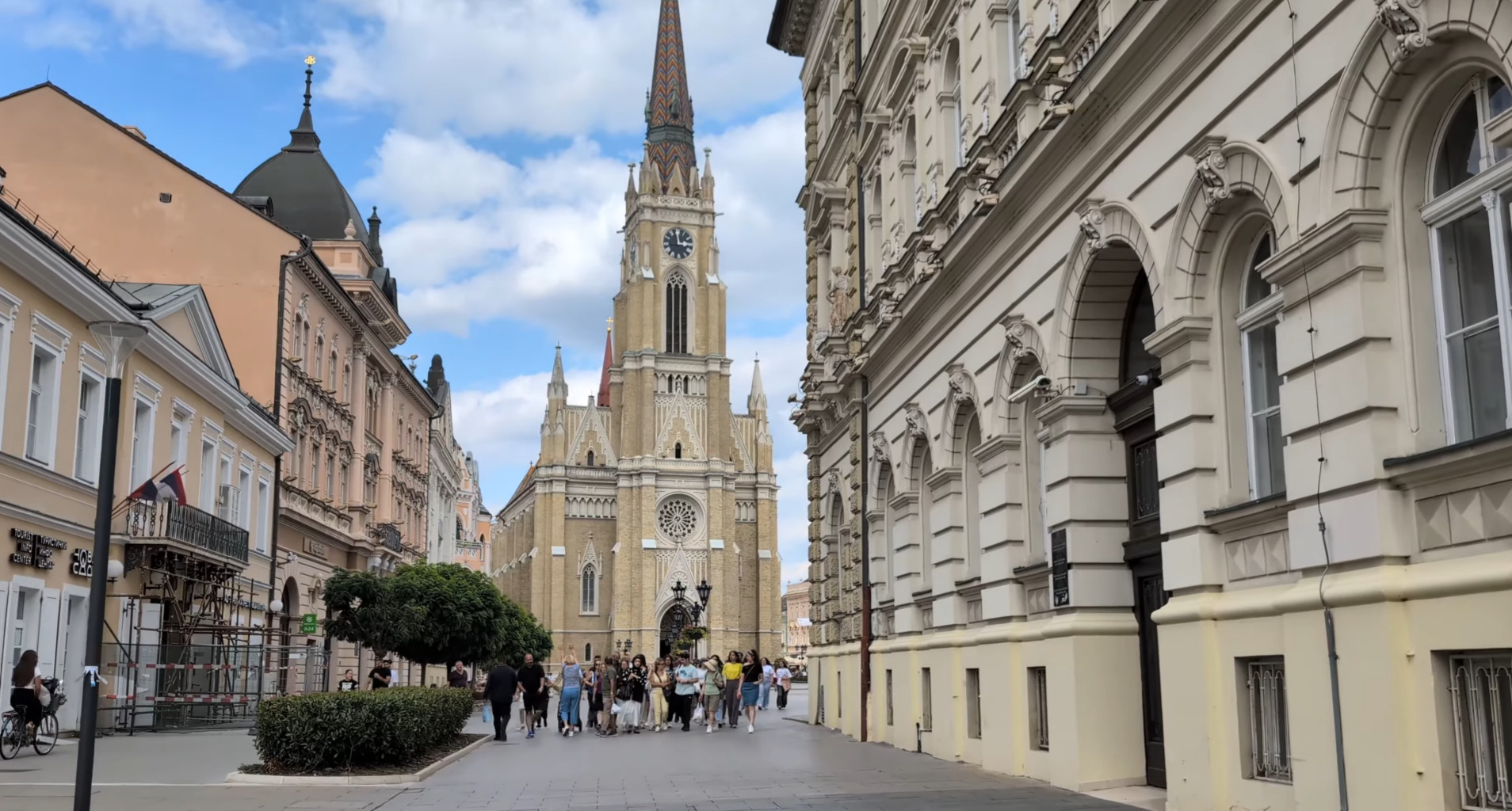
If you want a deeper breakdown of how this area works — what streets matter and how to navigate it without overthinking — that’s covered in Old Town.
Some streets feel polished, others don’t. That mix is part of the character.
Cross Toward Petrovaradin Fortress
At some point, you naturally move toward the bridge. It’s not a dramatic moment — but it changes everything.
The city opens up behind you. The river appears properly. And the fortress, which looked distant before, suddenly becomes the next step rather than a separate destination.
That transition — center to fortress — is one of the most important parts of the whole experience. It’s where Novi Sad stops feeling flat and starts gaining depth.
If you want to understand what to expect once you’re up there, how much time to plan, and what actually matters beyond the viewpoint, go deeper in Petrovaradin Fortress.
Slow Down Along the Danube Riverside
After the fortress, most people assume they’re done. That’s another mistake.
The riverside isn’t an optional extra. It’s where the city relaxes. Paths stretch out, cafés loosen up, and the pace drops in a way that feels very different from the center.
In summer, this is where locals actually spend time — walking, cycling, sitting near the water. Even outside peak season, the river changes how the day feels.
To see how to approach this part properly — including where to walk and what to skip — continue into Danube Riverside.
The Main Areas That Shape a Novi Sad Visit
If you strip Novi Sad down to its essentials, it’s not a long list of attractions. It’s a small number of areas that work together. Miss one, and the whole experience feels incomplete. Get the balance right, and the city clicks without effort.
Most first-time visits naturally move between three core zones: the Old Town, the fortress, and the Danube. Each one plays a different role — and understanding that difference matters more than trying to “see everything.”
Old Town and the Historic Core
This is where everything starts. Not because it’s overwhelming, but because it’s easy. The streets are compact, the layout is readable, and you don’t need to plan much to get your bearings.
Freedom Square anchors the area, but it’s the surrounding streets that define the experience. Zmaj Jovina and Dunavska aren’t just walking streets — they quietly guide you through the center without you needing to think about direction.
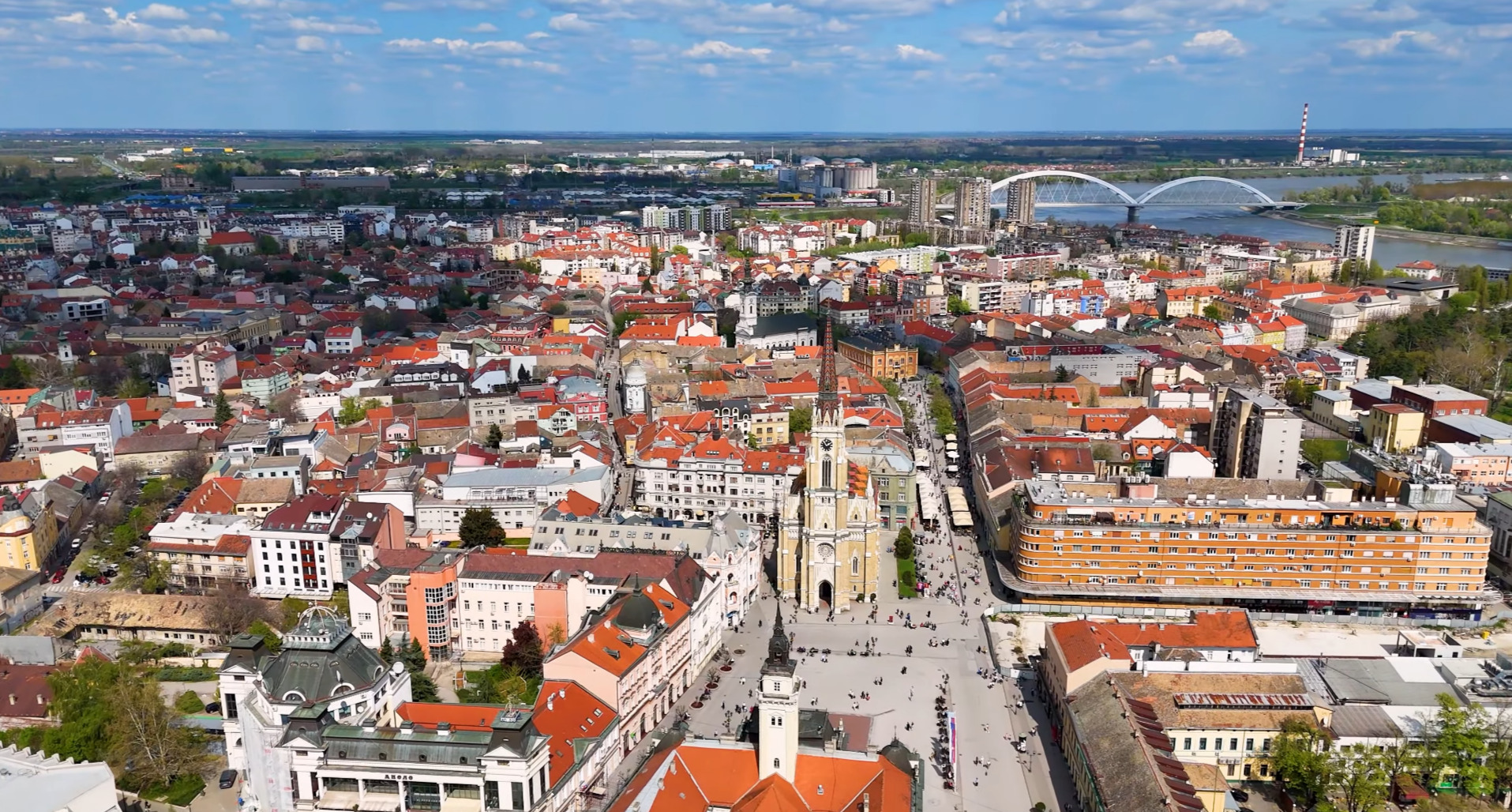
What surprises people is how quickly it ends. You expect a larger historic zone. Instead, it compresses into something manageable — almost understated.
That’s not a weakness. It’s what makes the rest of the city accessible. You’re never stuck in one place for too long. You move on naturally.
For a deeper breakdown of how to navigate this area properly, including where to slow down and where not to overthink it, see Old Town.
Petrovaradin Fortress and the View Over the City
From the center, the fortress looks like a backdrop. Once you cross the bridge, it becomes the main stage.
The climb isn’t difficult. The shift is mostly psychological. You leave the tight, structured streets and step into open space — wider paths, fewer people, more air.
And then you turn around.
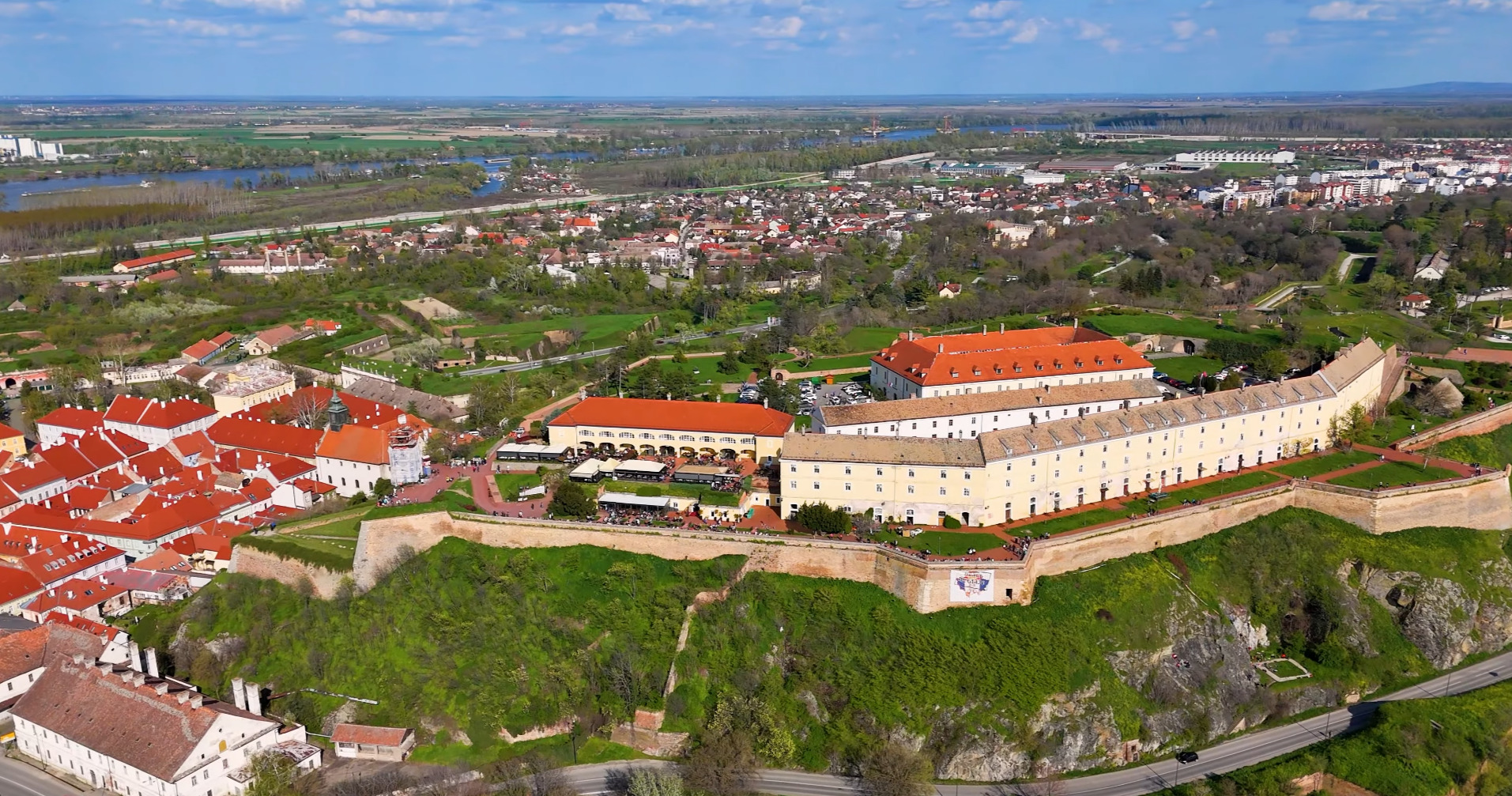
That’s the moment. The view isn’t just “nice.” It explains the city. You see how small the center actually is, how the river cuts through everything, and how the two sides relate to each other.
The fortress itself isn’t packed with must-see points. It works as a place to walk, stop, look around, and take your time. If you treat it like a checklist, it feels empty. If you treat it like space, it works.
For details on how to approach it without wasting time — and what actually matters once you’re there — go deeper in Petrovaradin Fortress.
Danube Riverside, Štrand, and the Local Pace
The river is where Novi Sad settles. After the center and the fortress, this is the part that changes your pace completely.
The paths stretch out, the city loosens, and suddenly you’re not moving between points anymore — you’re just walking.
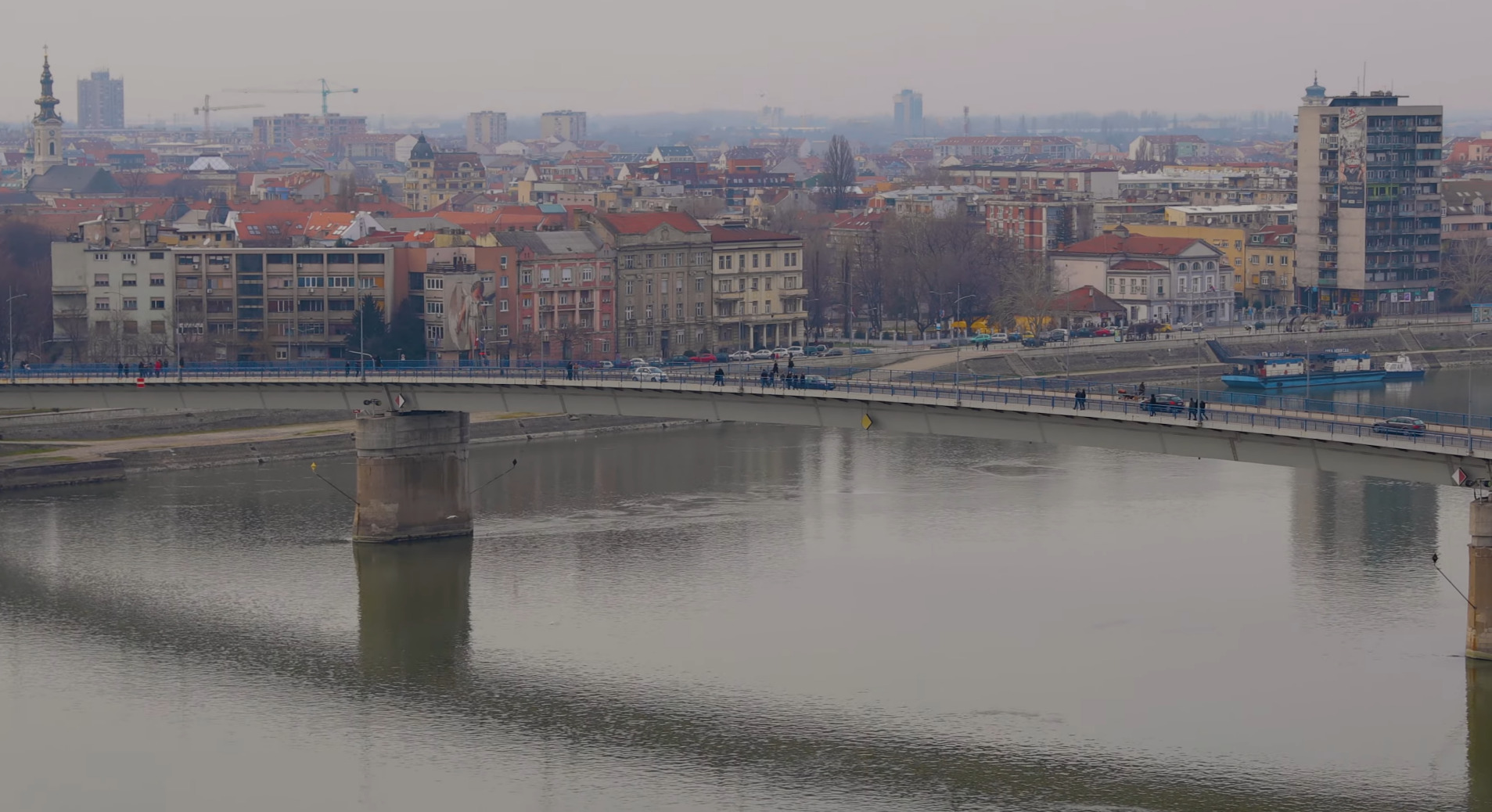
Štrand, the main city beach, becomes relevant in warmer months. It’s not a hidden spot. It’s where locals actually go. Sand, open space, and a very different rhythm compared to the center.
Even outside summer, the riverside still matters. It’s the easiest place to understand how people use the city when they’re not sightseeing.
If you want a clearer idea of where to walk, what sections feel different, and how to fit this into your day, continue into Danube Riverside.
| Area | What it’s best for | Time needed | Best time of day |
|---|---|---|---|
| Old Town | First orientation, cafés, short walks | 1–2 hours | Morning / late afternoon |
| Petrovaradin Fortress | Views, open space, slower exploration | 1–2 hours | Late afternoon / sunset |
| Danube Riverside | Relaxed walking, local life, cycling | 1–2 hours | Evening / summer days |
How to Get Around Novi Sad
Getting around here is simple — and that’s part of the experience.
Practical movement
- Old Town → fully walkable
- Bridge crossing → 10–15 minutes on foot
- Fortress → short uphill walk, not demanding
- Riverside → long, flat walking paths
Most visitors don’t need transport at all. Walking connects everything naturally. Taxis are cheap if needed, but rarely necessary for a first visit.
How Much Time You Really Need in Novi Sad
This is where expectations usually go wrong. People assume Novi Sad is either a quick stop or something that needs multiple days. In reality, it sits somewhere in between — and the difference comes down to pace.
If You Only Have Half a Day
You can cover the basics. Start in the center, walk toward the bridge, go up to the fortress, and get at least a short moment by the river.
It works — but it feels compressed. You’re moving forward the whole time, with very little space to pause.
If you’re planning a short visit like this, structure matters more. A clearer breakdown is covered in itinerary.
If You Have One Full Day
This is the sweet spot.
You can move through the city without rushing. Spend time in the center without watching the clock. Stay longer at the fortress. Sit by the river instead of just passing through.
The city starts to feel complete at this point. Not because you’ve seen everything, but because you’ve experienced the transitions properly.
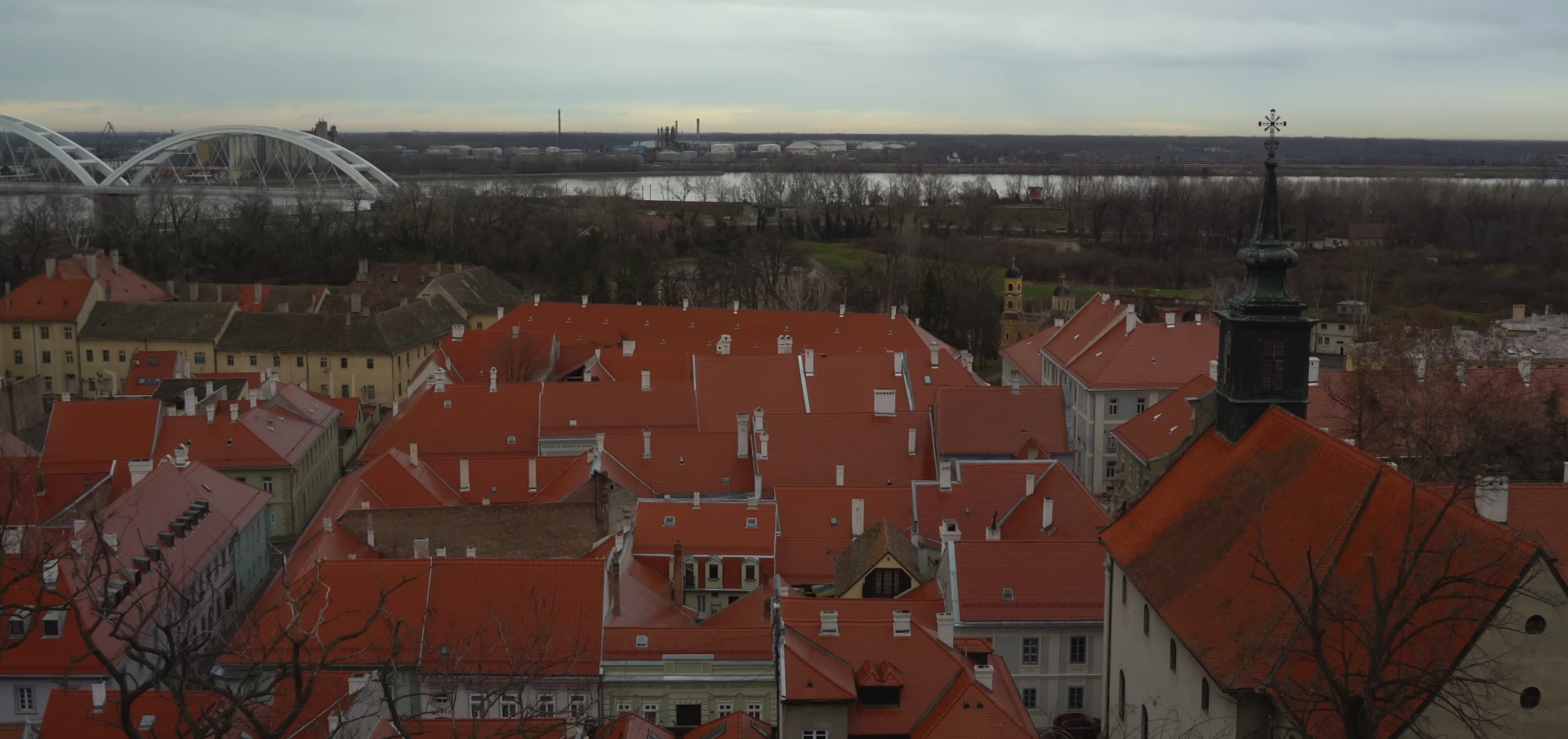
If You Stay Two Days or More
Now the city shifts again.
You stop thinking in terms of “what to see” entirely. One day becomes structure. The second becomes freedom — slower walks, food, smaller details, or short trips outside the city.
This is also where Novi Sad connects outward. Day trips, nearby towns, and the surrounding region start making sense.
For that next layer, continue into best day trips.
- Half-day: center → fortress → short riverside stop
- Full day: relaxed center → fortress → extended riverside time
- Two days: full city + slower pace + optional day trips
What a Real Day in Novi Sad Feels Like
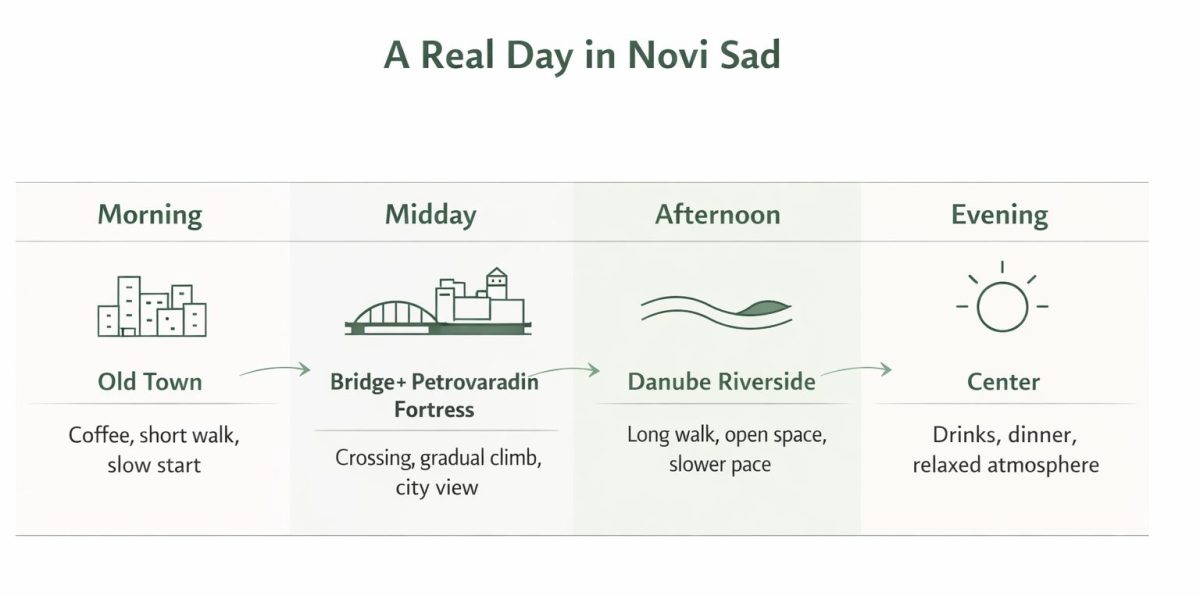
If you’re trying to picture how all of this actually fits together — here’s what a normal day ends up looking like.
Simple day flow
Morning — Old Town → Midday — fortress → Afternoon — river → Evening — center
You start slow. Coffee somewhere in the center, no rush. Walk a bit, stop again, drift without thinking too much about direction.
Around midday, you naturally move toward the bridge. The transition happens almost without planning it.
The fortress takes longer than expected — not because there’s so much to “see,” but because you stay. Walk, stop, turn around, sit again.
Later, the river. This is where the day relaxes. Less movement, more time.
By the evening, you’re back in the center — but it feels different. Slower, more settled.
Best Things to Do in Novi Sad by Travel Style
Not everyone moves through a city the same way. Some want structure. Others just walk and see what happens. Novi Sad works for both — but only if you lean into the right pace.
Instead of thinking in terms of “top attractions,” it’s more useful to match the city to how you travel.
If You Only Have Half a Day
You don’t have time to explore deeply, so the goal is simple: connect the key areas without overcomplicating it.
Start in the center, move through it without stopping too long, cross the bridge, spend some time at the fortress, and end near the river. That’s enough to understand how the city works.
If you want a clean structure for a short visit, it’s broken down step by step in itinerary.
If You Want a Full City Day
This is where Novi Sad starts to feel right.
You don’t need to move fast. The center becomes a place to wander, not just pass through. The fortress is no longer just a viewpoint — you stay longer, walk further, stop without checking time.
And the river isn’t an afterthought anymore. It becomes part of the day, not just the end of it.
At this pace, the city doesn’t feel small. It feels balanced.
If You Prefer Slow Travel
Then Novi Sad works almost immediately.
You stop planning around “what to see” and start thinking in stretches of time. A long walk through the center. A break somewhere that wasn’t planned. A second coffee instead of moving on.
The river fits naturally into this. So does food. Not as separate activities — but as part of how the day unfolds.
If that’s the way you travel, it’s worth going deeper into both Danube Riverside and what to eat, where the slower side of the city becomes clearer.
If You Want More Than the Obvious Stops
Most visitors stay within the center–fortress–river loop. It’s easy, and it works.
But if you step slightly outside that loop, the city changes again. Quieter streets, less direction, fewer people. It’s not about big hidden attractions — it’s about a different atmosphere.
That layer isn’t obvious unless you look for it. And it’s exactly what separates a quick visit from a more complete one.
To explore that side properly, continue into hidden gems.
- Short visit: connect the main areas without stopping too long
- Full day: slow down transitions and extend time in each zone
- Slow travel: remove structure and let the city unfold naturally
What to Eat Between Stops
Food in Novi Sad isn’t something you plan around in detail. It fits into the day almost automatically.
You grab something early, stop again later without thinking about it too much, and by the evening you’ve tried more than you expected without ever scheduling a “food experience.”
That’s how the city works. Eating here is part of moving through it.
Mornings often start simple — bakeries, something warm, quick coffee. Around midday, the pace slows down. This is where local dishes make more sense: grilled meat, stews, heavier meals that match the rhythm of the day.
By the time you reach the river or return to the center in the evening, food becomes lighter again. Drinks, smaller plates, longer sitting.
You don’t need a strict plan. But if you want to understand what’s actually worth trying — and how to avoid the more tourist-facing spots — go deeper in what to eat.
In Novi Sad, food isn’t a separate activity. It naturally fills the gaps between walking, stopping, and slowing down.
Hidden Things to Do in Novi Sad
At first, the city feels straightforward. Center, fortress, river — done.
But that’s only the visible layer.
Step a little off the main streets, and the rhythm shifts. Side streets behind Dunavska. Quieter residential pockets. Small courtyards that don’t appear on any list. None of it is dramatic — but together, it changes how the city feels.
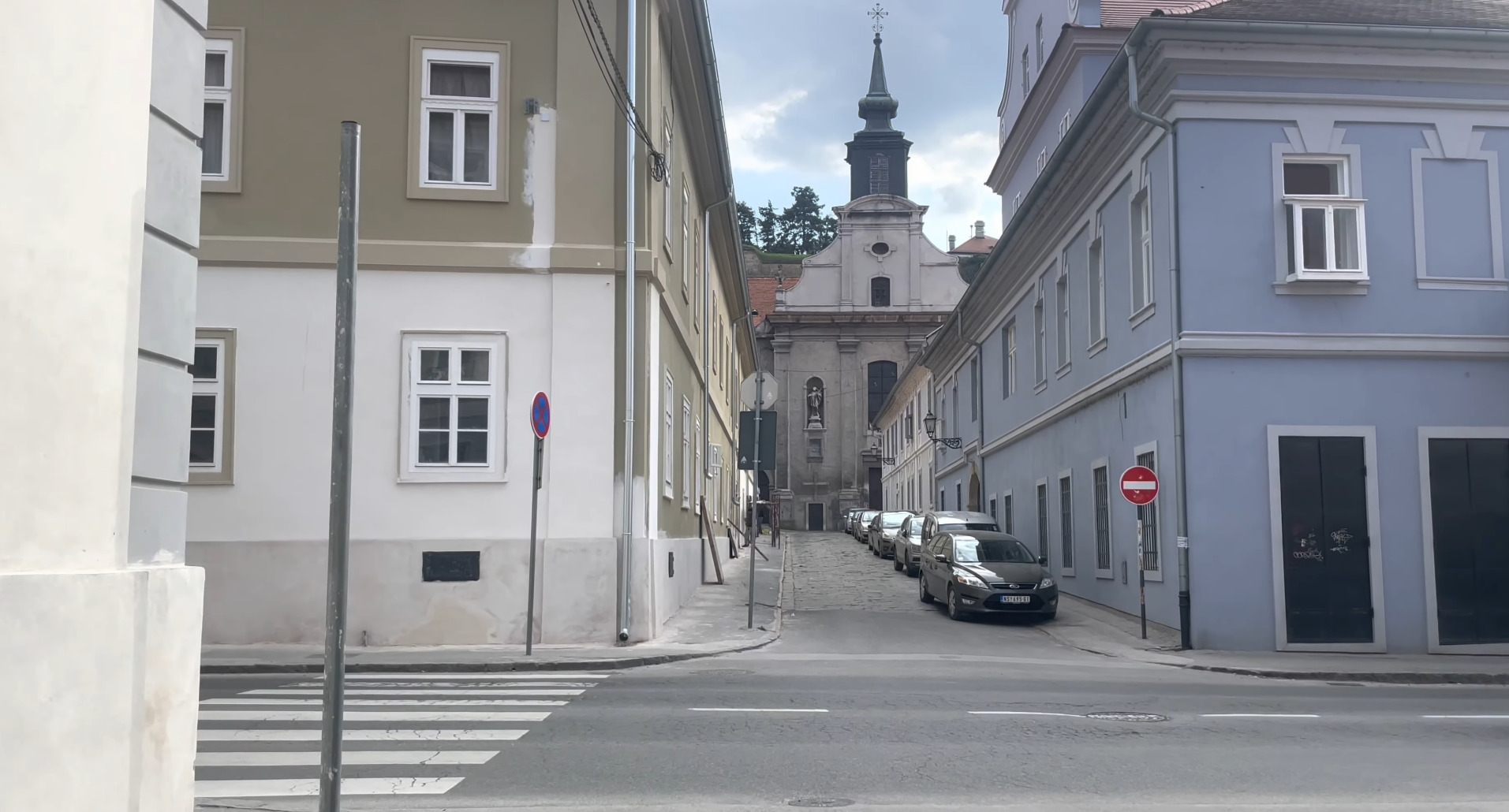
This isn’t about “secret attractions.” It’s about moving away from the obvious flow and letting the city lose its structure a bit.
Even crossing slightly beyond the usual paths — into areas most visitors skip — adds a different perspective. Less polished, more local, less directed.
You won’t find a checklist here. And that’s the point.
If you want a clearer idea of where to go and how to approach this layer without wandering aimlessly, continue into hidden gems.
Things to Do in Novi Sad at Night
Novi Sad doesn’t transform dramatically at night. It shifts — but stays itself.
The center becomes more active, but not overwhelming. Bars fill up, terraces stay busy, and people linger longer. It feels social rather than intense.
If you’re expecting a high-energy nightlife scene like Belgrade, it might feel restrained. But if you’re looking for something more relaxed — somewhere you can move between places without pressure — it works well.
Evenings often start slowly. A drink in the center, maybe a short walk, then another stop somewhere nearby. There’s no need to plan heavily. Everything stays within reach.
In warmer months, the rhythm extends toward the river. And during certain periods, the fortress becomes active again — not just as a viewpoint, but as an event space.
For a clearer breakdown of areas, what to expect, and how to approach evenings depending on your style, see nightlife.
Novi Sad works best at night if you keep expectations simple — a few good places, short distances, and time to stay longer rather than move constantly.
If you’re chasing a big night out, you’ll probably feel it’s missing something. If you’re not — it works.
Best Day Trips From Novi Sad
At some point, Novi Sad stops being the whole trip and starts becoming a base.
The city itself is compact. Once you’ve spent a full day here, the natural next step is outward — into the surrounding region. And that’s where things open up.
You don’t need to go far. Within a short distance, the landscape changes — hills, vineyards, small towns, monasteries. It’s a different pace again, but it connects easily with the city.
Some trips are quick and focused. Others take most of the day. The key is choosing based on how much structure you want.
Good next-step trips
- Fruška Gora — nature, viewpoints, monasteries
- Sremski Karlovci — small town, wine, slower pace
- Wine routes — short, flexible, easy to combine
- Mixed day routes — combining Novi Sad with nearby stops
If you want detailed routes, timing, and how to combine these properly without rushing, continue into best day trips.
What Most Visitors Get Wrong
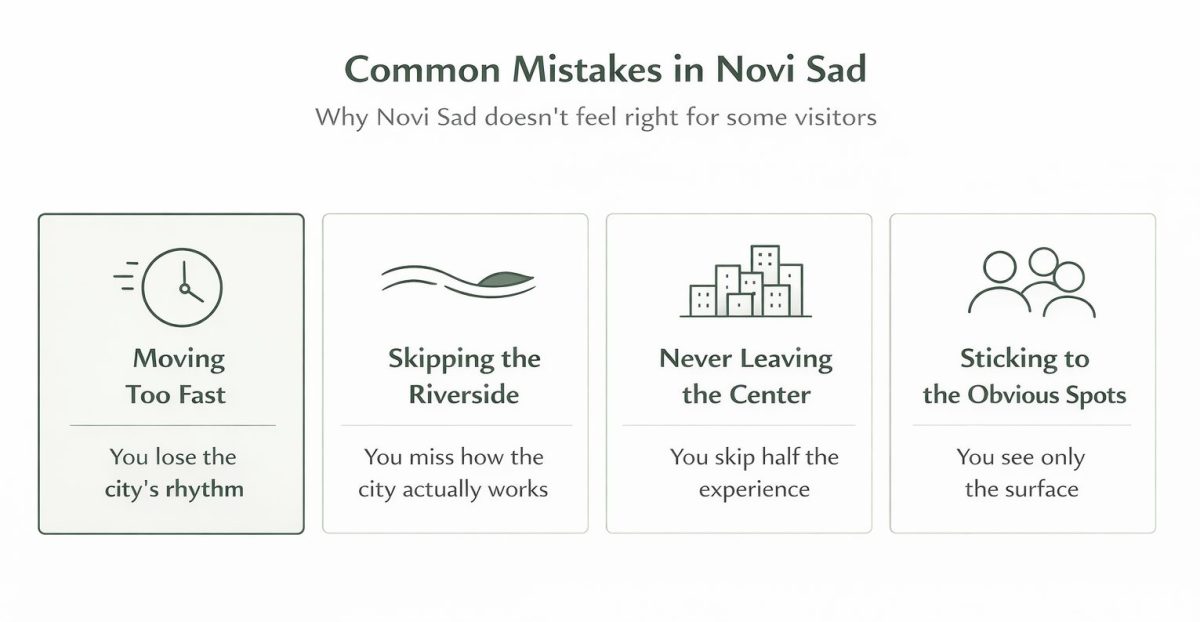
Novi Sad is simple — but that simplicity is exactly where people misread it.
The most common mistake is treating it like a checklist destination. People arrive with a list of places, move quickly between them, and leave feeling like they’ve “seen everything” — but not really experienced anything.
Another mistake is underestimating time. On paper, everything looks close. And it is. But the experience isn’t about distance — it’s about pacing. Rushing through the city removes the part that actually makes it work.
Some visitors skip the river entirely. They stay in the center, maybe go up to the fortress, and leave. That cuts out one of the main layers of the city.
Others expect something more intense — more landmarks, more constant activity, more structure. When that doesn’t appear, they assume there’s “not much to do.” In reality, they’re just applying the wrong expectations.
And then there’s the comparison with Belgrade. It comes up almost automatically. But the two cities don’t play the same role. Trying to measure Novi Sad against a larger, louder capital usually leads to the wrong conclusion.
Where expectations usually go wrong
- Trying to turn the city into a checklist of sights
- Moving too fast between areas
- Skipping the riverside layer entirely
- Expecting big landmarks instead of a cohesive experience
- Comparing it directly to Belgrade
The city doesn’t reward speed. The faster you move, the less you actually get from it.
Is Novi Sad Worth Visiting?
Short answer — yes. But only if you approach it the right way.
Novi Sad isn’t a city that overwhelms you with sights. It doesn’t try to impress you every few minutes. What it does instead is build a consistent, easy rhythm that works over a few hours — or a full day if you let it.
If you’re looking for a place where everything is close, where walking makes sense, and where the experience comes from how things connect rather than how big they are, it fits extremely well.
If you’re expecting a dense, landmark-heavy destination — something you can “cover” quickly with a list — it might feel underwhelming.
The difference isn’t the city. It’s how you move through it.
Who Novi Sad works best for
- First-time visitors to Serbia looking for a balanced city experience
- Travelers who prefer walking over structured sightseeing
- Slow travel — cafés, open space, flexible days
- Short trips combined with nearby regions
Who might find it limited
- Travelers looking for constant major attractions
- Trips built entirely around museums and landmarks
- People expecting big-city energy at all times
Final Practical Route for First-Time Visitors
If you’re visiting Novi Sad for the first time and don’t want to overthink it, keep it simple. The city already has a natural structure — you just follow it.
Start in the center. Walk without a strict plan. Let the streets guide you rather than trying to map everything out in advance.
When the movement naturally pulls you toward the river, follow it. Cross the bridge, take your time going up to the fortress, and stop more than you think you need to.
After that, don’t end the day immediately. Move back down toward the river or return to the center and let the pace drop. That final stretch is what makes the whole day feel complete.
You don’t need to optimize this. You just need to avoid rushing it.
Simple Novi Sad flow
Old Town → bridge crossing → Petrovaradin Fortress → Danube riverside → return to center
Where to Go Next
Once you understand how Novi Sad works, the rest of the content becomes a continuation — not separate topics.
If you want to go deeper into specific areas, start with the center in Old Town, then continue across the river into Petrovaradin Fortress, and extend your walk along Danube Riverside.
To structure your time more precisely, especially for shorter visits, use itinerary as a step-by-step breakdown.
If you’re staying longer, expand outward through best day trips, or shift focus into food with what to eat.
And if you’re deciding whether Novi Sad fits into your trip at all, a more direct breakdown is in is it worth visiting.