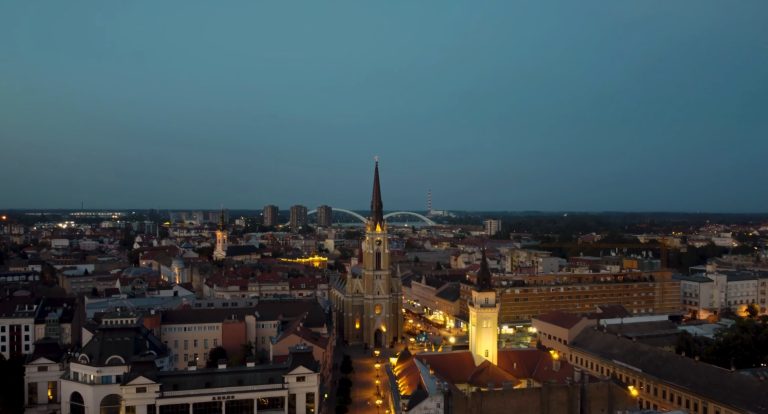
Novi Sad Danube Riverside: Where the City Slows Down and Opens Up
You don’t really set out for the Danube.
It happens somewhere between turns.
You leave the tighter streets, pass a café you almost stop at, check your phone once… then stop checking it. The streets loosen, buildings drift apart, and suddenly there’s space where there wasn’t before. You see the river a second later, not first.
That shift sticks more than the view.
It’s not about reaching anything specific. It’s the way the city exhales a bit when you get there.
Quick realityThe Danube in Novi Sad isn’t something you tick off. It feels more like the next layer after the center — where walking slows without you deciding to slow down.
Where the river sits inside a real Novi Sad day
Trying to isolate it doesn’t quite work.
You only notice how it fits once you’ve already been moving for a while — through the square, across a few streets, maybe stopping for coffee longer than planned.
Then you keep going.
At some point, you realize you’re heading toward the river without thinking about it.
How it usually unfolds
It kind of arranges itself like this.
Center → pedestrian streets → Danube → pause / walk → bridge → Petrovaradin or back
You don’t arrive and start doing something right away.
You arrive and just stand there for a second.
Then walk. Slower than before.
Getting there without thinking about it too much
You won’t need directions for long.
Maybe at the beginning — a quick check, a wrong turn that doesn’t matter — but after that, the city kind of pulls you in the right direction.
You cross a street you didn’t plan to, follow a wider one, pass a bakery you remember from earlier. Then it opens again, and you’re there.
No real effort.
That’s why it fits into short trips so easily. You don’t carve out time for it. It absorbs whatever time you have left.
What to avoidTreating the Danube like a separate stop. It works better when you just… end up there.
The first impression: space more than scenery
It doesn’t hit you all at once.

No big reveal. No perfect viewpoint where everything suddenly clicks.
It’s quieter than that.
You notice small things first. The way you stop checking your route. The way you sit down without planning to. The way your pace changes before you realize it has.
You look across instead of ahead.
And somewhere in that, the fortress starts making more sense — even if you’re not going there yet.
What changes when you reach the river
- walking turns into lingering without a clear moment when it happens
- the city feels wider than it did ten minutes earlier
- you start looking out, not forward
- plans loosen a bit, almost by accident
Why the riverside is not one single place

It’s easy to imagine it as one continuous stretch.
But when you’re actually walking it, it keeps shifting.
One part feels open and transitional, like you’ve just arrived. A bit further, it gets busier — voices, bikes passing, people sitting longer than they meant to. Then it thins out again, quieter, slower.
You don’t really pick a section.
You pass through them.
| Section | How it feels | When it works best |
|---|---|---|
| Near the center | Open, easy, like you’ve just stepped out | First minutes by the river |
| Štrand area | More movement, more people, a bit louder | Warm afternoons |
| Quieter stretches | Slower, almost local in feel | Evenings, longer walks |
| Bridge / Petrovaradin side | More direction, like you’re heading somewhere again | Continuing toward the fortress |
You don’t stop and decide.
You just keep walking.
And at some point, you realize the river wasn’t the destination.
It was the part where everything slowed down enough to notice where you actually are.
The central stretch: where the river first opens up
You step out of the tighter streets and it happens almost without warning.
One more corner, a short walk past a row of buildings — then the space just opens. The path widens, the air shifts a bit, and you slow down without deciding to.
It doesn’t look dramatic.
Just more sky. More distance between things.
The bridge lines sit across your view. The fortress is there too, across the water — not pulling you, just… present. People pass by, some walking, some stopping for no clear reason.
You check your phone for directions, then put it away. Nothing urgent ahead.
And you end up staying longer than you meant to.
What people actually do here
- pause after walking out of the center
- sit without really planning to stop
- watch the river for a while, then a bit longer
- walk toward the bridge almost by accident
It doesn’t feel like a place you came to see.
More like a place you drift into.
Štrand: when the river becomes the destination
Come back in warmer months and it’s a different scene.
Up until here, the river is something you pass alongside. Near Štrand, people settle in. Towels, bags, drinks, groups forming and staying put.
You notice it right away.
The pace changes, but not in a quiet way — more social, a bit louder, people claiming space instead of moving through it.
You walk in thinking you’ll just look around. Then you hesitate. Maybe check where the entrance is. Maybe stand there a second longer deciding if you’re staying.
And suddenly you are.
How Štrand worksThis is the main river beach in Novi Sad. During summer, it turns into a place people plan around — not a quick stop, but something you give a few hours to without noticing how they pass.
When it fits your trip
- summer visits
- days where you’re not rushing between stops
- afternoons that stretch into evening
Outside of that season, it’s quieter. Still there, just not pulling you in the same way.
The quieter stretches: where the river stops performing
Keep walking and things thin out.
Less movement. Fewer places to stop. The path stretches longer than you expect — you think it’s a short walk, then it keeps going.
You notice your pace change again.
No reason to stop. No reason not to.
At some point, you stop checking where you are. You just keep moving, or pause, or turn back without thinking too much about it.
Important shiftSome of the better moments here don’t stand out at all. They’re the parts you don’t take photos of.
It starts to feel less like a route and more like something you’re just passing through.
The bridge and Petrovaradin side: the river becomes a transition
Eventually, your attention shifts.
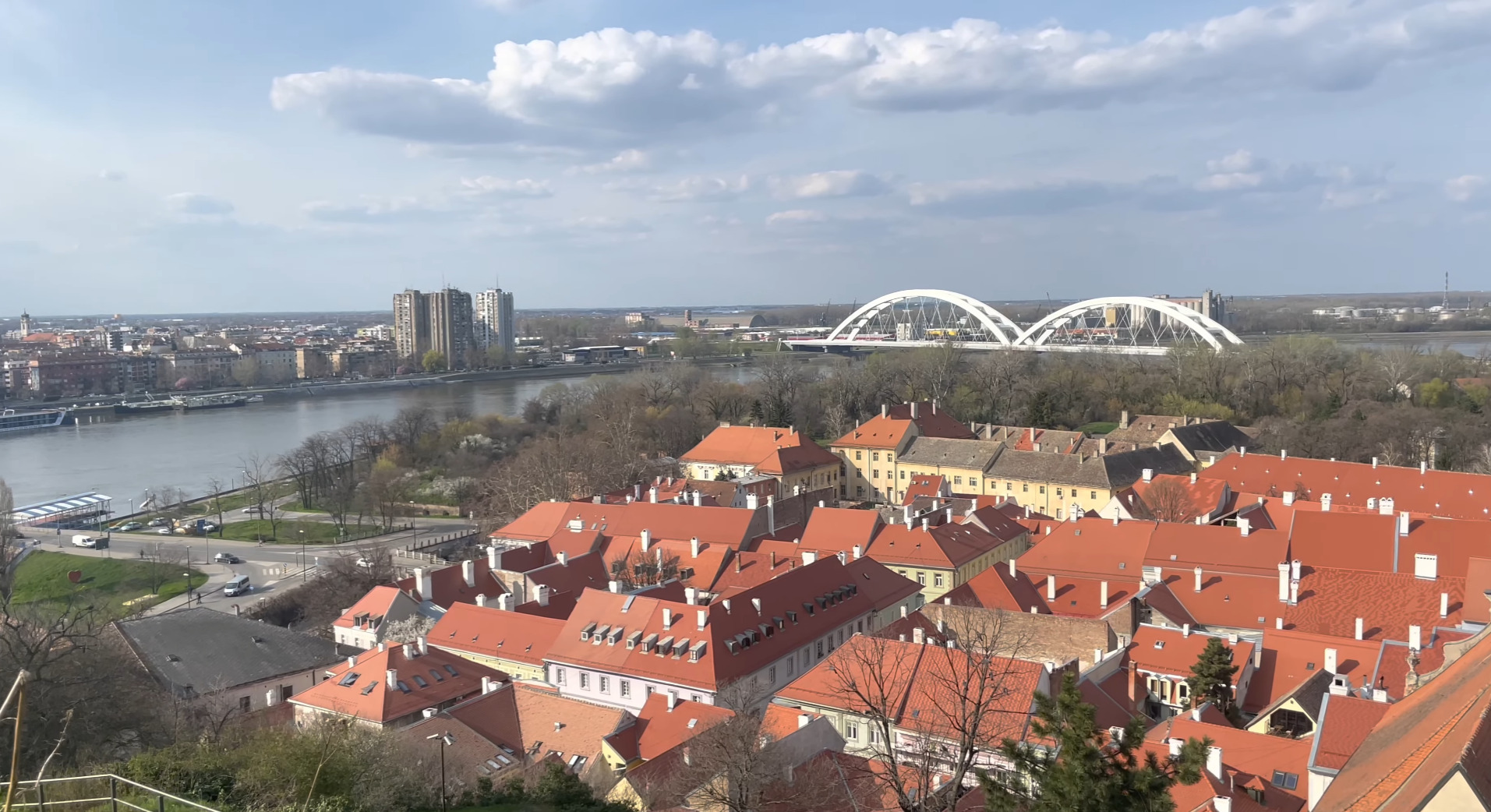
The bridge isn’t just part of the view anymore. It becomes an option. You slow down near it, maybe glance up, maybe check how long it takes to cross.
It’s a small decision, but you feel it.
The fortress across the water suddenly looks closer. Less like background, more like the next place.
And the river stops being where you are.
It turns into something you cross.
How the route continues
The walk often carries you straight into the next part of the day.
Danube → bridge crossing → Petrovaradin Fortress → return or continue
You don’t have to go over.
Still… you linger there a second longer than expected.
What people underestimate about the riverside
At first glance, it feels almost too simple.
A path. Water. Benches. Nothing that looks like it should hold your attention for long.
But then time slips a bit.
You sit down “for a minute.” You look up again and it’s been longer than that. No clear point where you decided to stay.
It sounds small, but it shifts the whole day.
What the riverside quietly does to your day
- breaks the rhythm of moving from place to place
- creates pauses without planning them
- makes transitions feel softer, less forced
- gives you space without asking for it
Hard to point at one thing.
More about what fades out while you’re there.
Where the river naturally leads next
After a while, something shifts again.
You’ve walked enough. Sat long enough. The light changes slightly — softer, lower. You start thinking about what comes next without rushing it.
You stand up, maybe stretch a bit, and look around.

And the next move isn’t complicated.
You start thinking about where to sit next — properly this time.
That’s when the riverside connects to food.
Natural transition
The river often becomes the step before settling somewhere for a meal.
/danube-riverside → /danube-restaurants
Keep the focus clearThis part of the page should only hint at what comes next. The actual food choices belong elsewhere — here, it’s just the moment before you decide.
Best time to use the riverside
The Danube doesn’t feel the same all day.
Same path. Same water. Not the same mood at all.
| Time of day | What it feels like | What works best |
|---|---|---|
| Morning | Open, quiet, almost empty | Light walks, easing into the day |
| Midday | Brighter, busier, less still | Short breaks between city stops |
| Evening | Softer, calmer, more atmospheric | Longer walks, slowing down before dinner |
A lot of people end up here later in the day without really planning it.
You leave the center, walk a bit farther than expected, maybe glance at the map once near the bridge, and then the river is suddenly there beside you.
That timing usually feels right.
Not too early. Not like you saved it for some big finale either.
Where people usually get it slightly wrong
Not by going there.
By expecting it to behave like an attraction.
People look for one photo point. One clear “spot.” Somewhere to arrive, pause for two minutes, then move on.
That’s the part that never quite lands.
Common mistakes
- treating the riverside like a checklist stop
- going there too early, before the day has built up
- staying too briefly and moving on too fast
- expecting a single highlight instead of a continuous space
The river doesn’t hand you one perfect moment.
It gives you room.
That’s a very different thing.
The space between passing through and actually using it
You can walk along the Danube for ten minutes and say you’ve seen it.
Plenty of people do exactly that.
Or you can let it stretch a little.
Slow down. Sit for a bit. Stop checking what comes next. Maybe you meant to cross the bridge right away and then just… didn’t.
The place stays the same.
Your rhythm changes.
What to optimize forDon’t try to cover the riverside. Give it enough time to stop feeling like a corridor between places and start feeling like part of the day itself.
How the riverside fits into your overall route
By the time you reach the Danube, you’re usually not at the start anymore.
You’ve already walked the center, made a few small turns, maybe stopped for coffee longer than planned. The river arrives as a kind of release after that.
Which is why it works so well in the middle.
Typical flow
The river sits between the tighter city grid and whatever comes after.
Center → Danube → Petrovaradin or dinner → return
You can loop back into town.
Cross the bridge.
Or stay where you are a bit longer than intended and let the day loosen up.
Where this connects to the rest of the city
The riverside doesn’t really stand alone.
It makes sense because of what sits around it — the center behind you, the bridge ahead, the fortress across the water, restaurants pulling you back in later.
Site flow
This page sits between general city orientation and more specific river experiences.
From here, the day usually splits in one of two directions.
You keep moving. Or you stop somewhere and eat.
Both routes feel natural from this point.
What this place actually is
Not a landmark.
Not really a must-see in the usual sense.
And not the thing you build the whole day around.
It’s the part of Novi Sad where everything opens up a bit.
The city stops pushing.
You stop moving because the route says so, and start moving more loosely — sit here, walk there, maybe keep going, maybe not.
Practical summaryThe Danube riverside in Novi Sad works best as a phase of the day, not a standalone stop. It usually comes after the center, opens up the city physically and mentally, and then carries you toward Petrovaradin, dinner, or just a slower stretch by the water.
Funny thing is, the less you force it to be “something,” the more memorable it becomes.