
How to Get to Novi Sad: The Easiest Routes and What Actually Makes Sense
Getting to Novi Sad looks almost too easy when you first pull up the map.
Belgrade sits right there. Straight line. Short distance. You zoom out and think — that’s nothing.
Then you actually try to plan it.
You open a train schedule. Then a bus page. Then you check how far the station is from where you’re staying. Then again from the airport. You switch tabs a few times. It still looks simple… just not in one clean way anymore.
There isn’t one obvious move. There are a few. And they don’t feel the same once you’re inside them.
Some options cut the time down so much you barely register the trip. Others feel slower, even if the difference on paper isn’t huge. A few remove decisions completely — you just follow along.
That’s what actually shapes the day.
Not the route itself. The small things around it.
Quick realityFor most trips, getting to Novi Sad really means one thing: coming from Belgrade. The distance is short, but where you’re starting — city center, airport, or somewhere in between — quietly changes what makes sense.
Contents
- 1 The only route that really matters: Belgrade to Novi Sad
- 2 The main ways to get there (and how they actually feel)
- 3 Why the train ends up being the default for most people
- 4 When the bus still fits better
- 5 Private transfer and car: when simplicity matters more than cost
- 6 Arriving at Belgrade Airport changes the whole decision
- 7 The three realistic ways to go from the airport
- 8 The train connection from the airport (most balanced option)
- 9 Direct transfer: the cleanest version of the journey
- 10 Bus-based routes: workable, but rarely the cleanest
- 11 What matters most after landing
- 12 Day trip vs staying overnight — this changes everything
- 13 How to choose the right way to get to Novi Sad
- 14 Where people usually overcomplicate this
- 15 The gap between a smooth trip and a fragmented one
- 16 How this page fits into planning your Novi Sad trip
- 17 What this page should leave you with
The only route that really matters: Belgrade to Novi Sad
Everything funnels through here.
You might arrive from another country, another city… doesn’t really matter. At some point, you land in Belgrade and then you figure out the rest.
So instead of treating this like a big travel question, it helps to shrink it.
It’s just one connection.
The core journey
Almost every version of this trip follows the same line.
Belgrade → Novi Sad
Once that clicks, the choice gets easier.
You’re not comparing everything. You’re deciding how you want that one stretch to feel.
The main ways to get there (and how they actually feel)
There are four realistic options.
But the labels don’t help much. What matters more is what each one quietly removes — or adds — while you’re moving.
| Option | What it removes | What it adds |
|---|---|---|
| Train | Travel time, uncertainty | Need to reach stations |
| Bus | Planning complexity | Longer travel feel |
| Car / transfer | All connections and transfers | Higher cost |
| Organized day trip | All transport decisions | Fixed structure |
| Option | Time | Comfort | Best for |
|---|---|---|---|
| Train | ~30–40 min | High | Most travelers |
| Bus | ~1–1.5h | Medium | Fallback option |
| Car / transfer | ~1h | Very high | Airport arrivals, groups |
None of them are wrong.
They just shift the experience a bit.
Why the train ends up being the default for most people
The fast train between Belgrade and Novi Sad takes roughly 30–40 minutes. It’s short enough that the trip barely settles — you’re already arriving before it starts to feel like a proper journey.
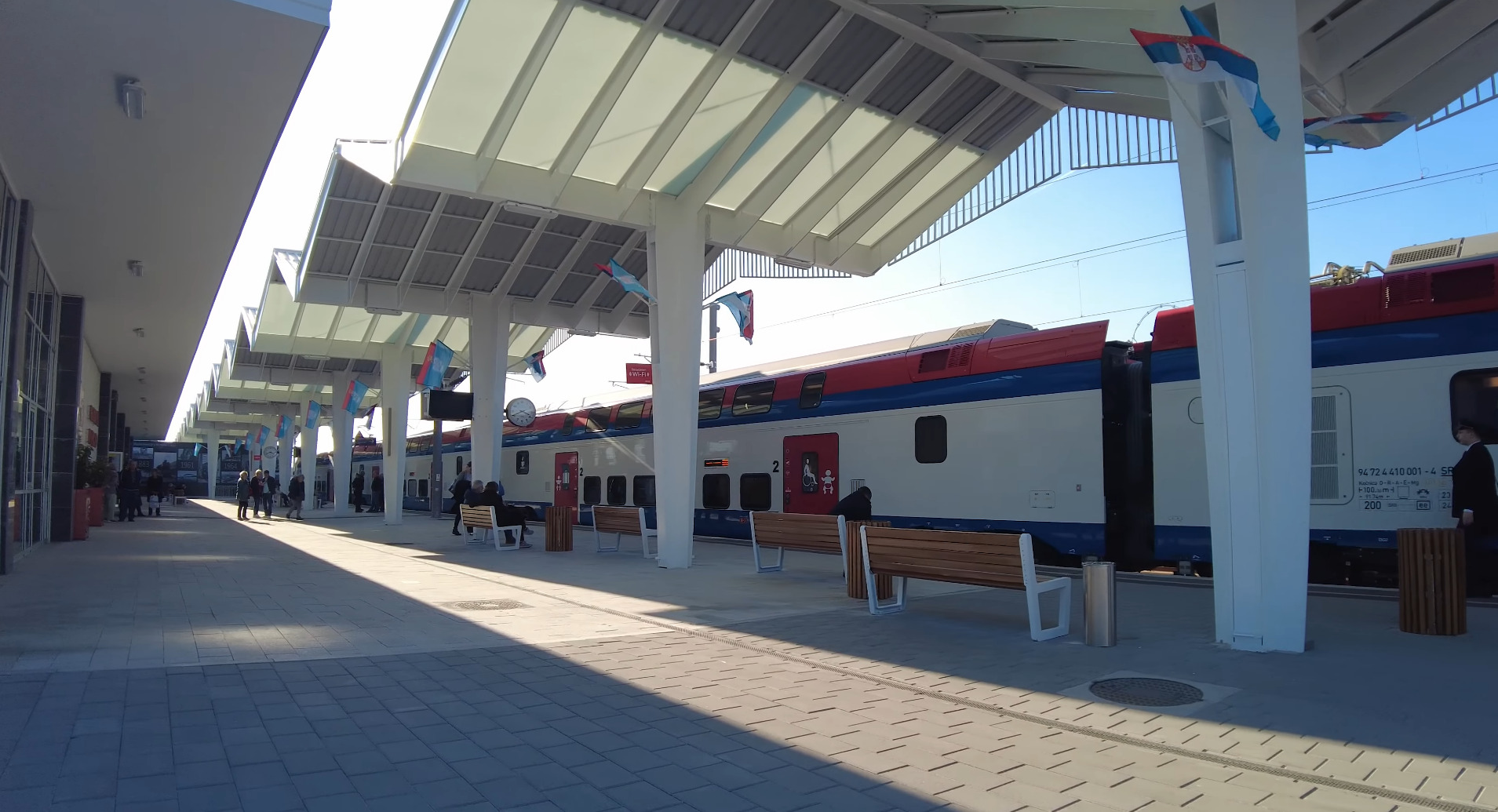
You get to the station, maybe a little earlier than needed. Stand around for a few minutes. Check the board twice even though you already know the platform. Then you sit down — and that’s basically it.
The city drops away almost immediately.
Fields, low buildings, a few scattered houses. You glance at your phone, look up again… and it’s already slowing down.
It doesn’t build into a journey. It just… happens.
That’s why it works so well. There’s barely anything to manage once you’re on it.
The only small friction is getting to the station in the first place. You might check the map once or twice, maybe walk a bit longer than expected if you’re coming from a side street or dragging a suitcase over uneven pavement.
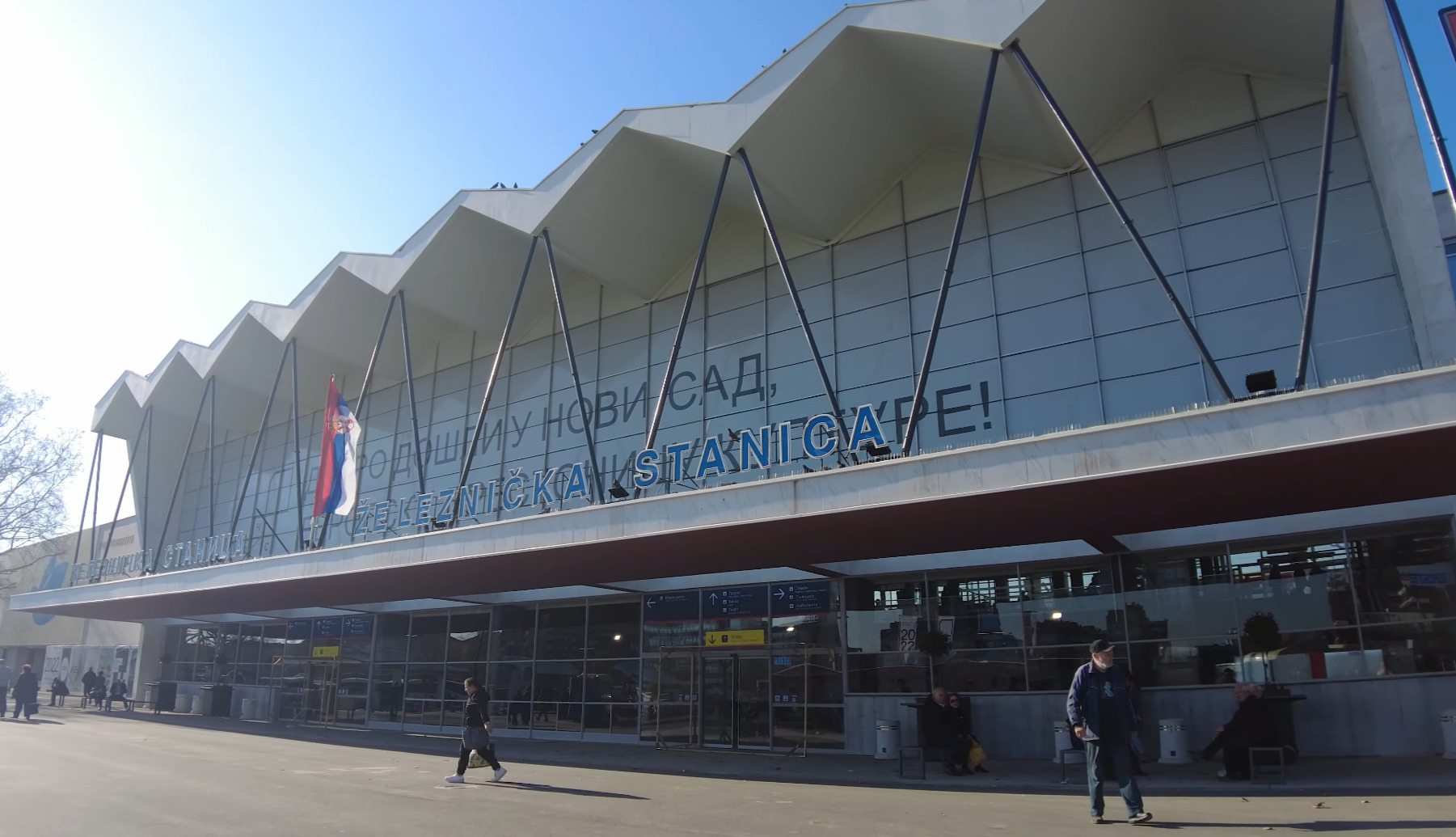
Then it smooths out.
How to read the rest of this pageThink of the train as the baseline. The other options start to make sense when something about your situation doesn’t fit neatly into that — arrival time, luggage, or how much structure you want around the day.
When the bus still fits better
The bus doesn’t really try to impress you.
You find the station. Maybe ask someone just to be sure you’re in the right place. There’s usually a bit more movement — people coming and going, drivers calling out destinations, that low-level noise you don’t notice until you stop and listen.
It feels more grounded.
You sit, it leaves, and the road takes over. Slower rhythm. A few stops. You look outside more because there’s not much else to do.
Time stretches slightly.
It still works perfectly fine. You arrive, step off, and you’re in Novi Sad like any other way.
It just feels like you traveled a bit to get there.
Simple ruleIf nothing is pushing you toward the bus specifically, the train usually feels lighter. Less buildup, less drag across the day.
Private transfer and car: when simplicity matters more than cost
According to Google Maps, it will take 1 hour 20 minutes to 1 hour 40 minutes (it’s better to aim for 2 with a little extra)
This is the cleanest version of the trip.
You walk out, get in, and go.
No stations. No figuring out platforms. No checking schedules again because you’re not sure you read it right the first time.
Especially after a flight, that shift matters more than you expect.
You step outside the airport, maybe a bit tired, maybe slightly disoriented from the arrival. You look around for a second — then someone’s already there, holding a name or just waiting near the exit.
And that’s it.
You don’t think about the route anymore.
Where most people landIf you’re arriving at the airport and don’t want to deal with connections, a direct transfer usually ends up being the easiest version of the trip — even if it costs more.
When this option makes more sense
- arriving at the airport with luggage
- traveling as a small group
- getting in late and not wanting to figure things out
- preferring a direct, uninterrupted transfer
It costs more, yes.
But it removes every small decision along the way.
And sometimes that’s exactly what you need.
Arriving at Belgrade Airport changes the whole decision
It stops being simple right there.
From central Belgrade, you just go. From the airport… it stretches out a bit.
You land, wait at the belt longer than expected, step outside, check your phone again — and suddenly you’re not just “going to Novi Sad.” You’re figuring out how many steps you want between here and there.
That’s the real call.
Not distance. Not speed. Just how clean you want that first stretch after the flight to feel.
What the journey actually becomes
It doesn’t happen in one move anymore.
Belgrade Airport → city connection → Novi Sad
The three realistic ways to go from the airport
At this point, things narrow quickly.
You’re standing outside, maybe scrolling maps, maybe just staring at the taxi line for a second longer than needed. And it’s already down to three options.
| Option | What it feels like | Best for | Main trade-off |
|---|---|---|---|
| Airport → train connection | Structured, logical, efficient | Independent travelers | One extra step after landing |
| Direct transfer | Smooth, uninterrupted | Groups, late arrivals | Higher cost |
| Bus-based route | Workable but less clean | Budget travelers | More moving parts |
All three get you there.
What changes is how often you have to stop and think along the way.
The train connection from the airport (most balanced option)
This is where many people land.
You leave the airport, get yourself into the city rail system, then continue toward Novi Sad like you started downtown in the first place.
There’s one extra step. You feel it mostly at the beginning — figuring out the first connection, checking signs, maybe second-guessing the platform once.
After that, it settles.
You’re on the same flow as everyone else heading north. The route stops feeling like a plan and just becomes movement.
How to think about itIf you don’t mind one small decision early on, this keeps everything else predictable — cost, timing, structure.
Direct transfer: the cleanest version of the journey
This one feels different immediately.
You walk out, meet your driver, put your bag in the trunk — and that’s it. No second step waiting somewhere ahead.
The city kind of slides past instead of pulling you into it.
You don’t open maps. You don’t check anything. You just sit there, maybe watch the highway flatten out, and then you’re already close to Novi Sad before it fully registers.
It sounds small. It’s not, after a flight.
When this becomes the best optionLate arrival, heavy luggage, or just that feeling of “not dealing with anything else today.” This removes the only messy part of the trip.
Bus-based routes: workable, but rarely the cleanest
You can piece it together with buses.
It works. People do it every day.
But it tends to feel… slightly off rhythm. One stop leads to another, then a wait you didn’t quite expect, then checking if you’re still on track.
Nothing dramatic. Just a bit more friction.
You notice it more when you’re tired.
Where it still makes sense
- tight budgets
- flexible timing
- no urgency after landing
What matters most after landing
At this point, the big numbers don’t really matter.
You’re not choosing between long and short. You’re choosing how the first hour feels — smooth, broken up, or something in between.
You feel it in small things. Lifting your bag again. Checking directions twice. Waiting when you thought you were already moving.
What actually affects your choice
- how many steps the route has
- whether you need to switch transport
- how much luggage you’re carrying
- what time you arrive
There isn’t one clean answer.
Just the option that fits how you feel when you walk out of the airport.
Day trip vs staying overnight — this changes everything
Up to here, it sounds like Novi Sad is the destination.
Important shiftIf Novi Sad is just one day from Belgrade, transport stops being the main decision. The structure of the day becomes more important than how you get there.
Sometimes it is. Sometimes it isn’t.
A lot of people stay in Belgrade and go up for the day.
That shifts things more than you expect.
Now transport isn’t just about getting there. It shapes the whole day — when you start, how rushed you feel, when you head back.
| Trip type | What transport needs to do | What matters more |
|---|---|---|
| Overnight stay | Get you there cleanly | Cost, simplicity, timing |
| Day trip | Fit inside one continuous day | Flow, structure, minimal friction |
Same route. Different feeling entirely.
Where to go next if you’re not staying overnight
If this is part of a single day out of Belgrade, the structure of that day starts to matter more than the ride itself.
/how-to-get-there → /belgrade-to-novi-sad-day-trip
That’s where you figure out how it all fits together.
How to choose the right way to get to Novi Sad
At some point, it all looks simple.
Train, bus, transfer. You’ve seen the options already.
Then you actually try to picture the day — where you start, what you’re carrying, what time you land — and it shifts a bit.
- Starting from central Belgrade — the train just works. You walk in, check the board (or your phone, again), and you’re moving soon after.
- Arriving at the airport — this is where people pause. You either connect through the city or skip all of it and go straight out.
- Traveling with luggage or in a group — dragging a suitcase through platforms sounds fine… until you’re actually doing it.
- Planning a day trip — transport stops being the main thing. The day starts to matter more than the route.
You don’t really need a “best option.”
You need something that fits how your day actually looks.
You notice it when you’re halfway through — either everything lines up… or you’re checking directions again, wondering if you missed something.
Where people usually overcomplicate this
It’s rarely the choice itself.
It’s treating every trip like it’s the same.
It isn’t.
A quick morning train from the center feels completely different from landing late, trying to figure out connections, and realizing you’re one step behind the schedule you had in mind.
On a map, it all looks identical. Clean. Short. Easy.
Then you’re there, phone in hand, zooming in on platforms or exits you didn’t think about earlier.
Common mistakes
- picking the cheapest route, then realizing it adds an extra transfer you didn’t expect
- treating an airport arrival like you’re already in the city center
- thinking small delays don’t matter on a short trip (they do, just enough to feel it)
- focusing on transport details instead of how the day actually unfolds
None of this ruins anything.
It just adds small friction. The kind you notice later.
The gap between a smooth trip and a fragmented one
Belgrade to Novi Sad is close. You feel that immediately.
But close doesn’t always mean effortless.
You wait ten extra minutes. Miss one connection. Walk a bit further than expected because the exit wasn’t where you thought. It’s small. Almost nothing.
Still adds up.
Then there are trips where you don’t think about any of it.
You leave. You move. You arrive. It just… continues.
What to optimize forNot speed. Not price on its own. Pick the version of the trip that doesn’t interrupt your day every 20–30 minutes.
How this page fits into planning your Novi Sad trip
Getting there is only the first piece.
Once that’s sorted, your attention shifts without you noticing.
You start thinking about what comes next — where you walk, where you stop, how the day fills itself.
Planning flow
You solve the movement first. Then the day starts to take shape.
/how-to-get-there → /itinerary
If you’re staying overnight, things slow down a bit. You have space.
If it’s a single day, you feel the timing more. Every small delay shows up.
Day trip path
From Belgrade, it becomes one continuous loop — not just getting there and back.
/how-to-get-there → /belgrade-to-novi-sad-day-trip
What this page should leave you with
Not schedules.
Not one perfect answer.
Just a sense of how this actually feels once you’re in it.
Novi Sad is close. You see that on the map.
But the way you get there shapes the first few hours more than you expect.
Practical summaryMost trips start from Belgrade, and the train usually ends up being the easiest to live with once you’re there. Airport arrivals add a small decision — connect through the city or go direct. Day trips follow their own rhythm, where transport blends into the plan rather than standing alone.
The best choice is the one you stop thinking about halfway through — when you’re already moving and not checking anything anymore.


